Warning and Caution
1. The battery is not designed to be charged; charging it may cause electrolyte leakage or damage to the device.
2. The battery shall be installed with its '+' and '-' terminals in the correct position; otherwise it may be charged or over-discharged.
3. Short-circuiting, heating, disposal in fire and disassembling of the battery are prohibited.
4. The battery must not be force-discharged, as this may lead to excess internal gas generation and result in bulging, leakage or explosion.
5. New and used batteries must not be mixed; when replacing batteries, it is recommended to replace all batteries with the same brand and type.
6. Exhausted batteries should be removed from the device to prevent over-discharge, which may cause leakage and damage to the device.
7. Direct soldering of the battery is not allowed, as it will damage the battery.
8. Keep the battery out of the reach of children to prevent swallowing; in case of accidental ingestion, contact a physician immediately.
9. The battery should not be dismantled or deformed.
10. Do not store or carry batteries together with metal objects (e.g., keys, coins) to avoid short-circuiting.
11. Do not immerse batteries in water or expose them to high humidity.
12. Do not attempt to modify or solder the battery directly.
13. If battery leakage occurs, avoid contact with skin and eyes. In case of contact, flush with plenty of water and seek medical advice immediately.
14. If leaked material comes into contact with the eyes, flush immediately with running water for at least 15 minutes and consult an ophthalmologist at once.
15. If the battery emits an odour, heats up, discolours, deforms or shows any other abnormal phenomenon during use or storage, remove it from the device immediately and dispose of it properly.
16. Do not mix batteries of different types, brands or significantly different capacities.
17. Avoid exposing batteries to extreme heat (e.g., direct sunlight or radiators).
Information Regarding Prevention and Management of Waste Primary (Non-rechargeable) Batteries
Follow the device manufacturer's instructions for correct battery insertion and usage. Avoid storing or using batteries in extreme temperatures or high humidity. Remove batteries from devices that will not be used for an extended period to prevent leakage or unnecessary discharge. Primary batteries are not rechargeable; do not attempt to recharge them, as this may cause leakage or rupture. When the battery is depleted, bring it to a designated collection point to enable potential material recovery or recycling.
(b) Role of End-Users in Separate Collection (Article 64)End-users are obliged to separate spent batteries from other household waste.
• Do not discard batteries in unsorted municipal waste or litter them.
• Separate collection facilitates proper treatment and resource recovery (e.g. zinc, manganese, steel, lithium), aligning with EU environmental objectives.
Spent batteries can be returned via: collection bins at retail points; municipal recycling centres; and designated battery collection points.
• Collected batteries will undergo sorting, pre-treatment (including neutralisation of electrolyte) and material recycling.
• Re-use or repurposing is generally not applicable for primary batteries, but material recovery is maximised.
Avoid storing waste batteries together with metal objects to prevent short-circuiting.
• If a battery shows signs of leakage (e.g. white or crystalline residue), deformation or overheating, handle it with protective gloves and store it separately in a plastic bag.
• Never dispose of batteries in fire, as this may cause explosion or release of hazardous fumes.
• Keep batteries out of the reach of children. If swallowed, seek medical attention immediately.
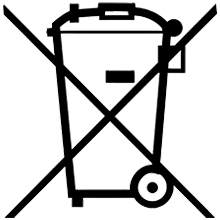


Crossed-out wheeled bin symbol (Article 13(4)): indicates that the battery should not be disposed of with unsorted household waste; it must be separately collected.
• CE marking: indicates that the battery (or the device for which it is intended) complies with the applicable EU health, safety and environmental protection requirements.
• Keep out of reach of children symbol: a warning to prevent ingestion or mishandling, especially for small children.
• Do not recharge symbol: this battery is non-rechargeable; attempting to recharge it may cause leakage or explosion.
• Non-rechargeable label (Article 13(3)): from 18 August 2026, non-rechargeable portable batteries shall bear a label indicating that the battery is 'non-rechargeable'.
• QR code (Article 13(6)): from 18 February 2027, all batteries shall bear a QR code providing access to the information required under Article 13 and Article 74(1), points (a) to (f).
• Chemical symbols for cadmium and lead (Article 13(5)): batteries containing more than 0.002 % cadmium or more than 0.004 % lead shall bear the chemical symbol 'Cd' or 'Pb' beneath the separate collection symbol.
Primary batteries contain various materials (zinc, manganese, lithium, etc.).
• If improperly discarded (e.g. landfilled or incinerated), the electrolyte can leak and cause soil and water contamination; heavy metals may accumulate in the environment.
• Swallowing a battery can cause injury; batteries should be kept away from children.
• Inappropriate disposal increases environmental burdens, wastes recoverable materials and may lead to fires or injuries during waste handling.
• Leaking batteries can cause chemical burns; always handle with care.
This information is provided to support end-users in responsible battery use and disposal, in line with EU waste legislation.
This battery is in conformity with Regulation (EU) 2023/1542. The notified body PONY TESTING GROUP SHENZHEN CO., LTD performed the heavy metal content testing and issued certificate No. MTHI8PFG7829857D1 dated 10 December 2025 with passed result. The declaration can be viewed or downloaded below.
📁 Related Documents
The relevant compliance document for this product can be viewed or downloaded below.